This blogsite will help you to see rare, unseen and historical photos which you never seen before. Besides you can know many unknown informations.It will help you to increase your knowledge.I am sure I will not disappointed you.
Showing posts with label Unknown history. Show all posts
Showing posts with label Unknown history. Show all posts
ঢাকা: ইয়াম্মি খাবার আইসক্রিম। আচ্ছা মুখরোচক এ
খাবারটি কী করে আবিষ্কার হলো তা কি কেউ জানো? আইসক্রিম আবিষ্কারের ইতিহাস
খুঁজতে গেলে ফিরে যেতে হবে খ্রিস্টপূর্ব দ্বিতীয় শতাব্দীতে। যদিও আইসক্রিম
আবিষ্কারের নির্দিষ্ট কোনো তারিখ বা নির্দিষ্ট আবিষ্কারকের নাম নেই। কারণ
এটি একবারে আবিষ্কার হয়নি।
আলেকজান্ডার দ্য গ্রেট ফুলের মধুতে বরফ দিয়ে খেতে ভালোবাসতেন। এদিকে
বাইবেলের রেফারেন্সে রয়েছে, রাজা সোলায়মান ফসল কাটার মৌসুমে বরফ পানীয় খেতে
ভালোবাসতেন। আবার রোমান সাম্রাজ্যের সময়কালে নিরো ক্লডিয়াস সিজার (৫৪-৮৬
খ্রিস্টাব্দে) ঘন ঘন তুষার পর্বতে লোক পাঠাতেন। পরে তাদের আনা সেই বরফ ফল ও
ফলের রসের সঙ্গে পরিবেশন করা হতো। ধারণা করা হয় আইসক্রিম রেসিপির সূত্র
এগুলোই।
এর এক হাজার বছর পর, মার্কো পোলো সুদূর প্রাচ্য থেকে ইতালিতে ফিরে আসেন। সঙ্গে নিয়ে আসেন একটি রেসিপি। যা এখনকার শরবতের মতো।
ইতিহাসবিদরা জানান, এই রেসিপিই ১৬ শতাব্দীতে আইসক্রিম হিসেবে পরিচিতি পায়।
ইংল্যান্ড সম্ভবত ওই সময়ে বা তারও আগে আইসক্রিম আবিষ্কার করে। এরপর ১৭
শতাব্দীতে রাজা প্রথম চার্লসের টেবিলে রোজই দেখা যেতো ক্রিম আইস নামক একটি
খাবার। ইতালিয়ান ক্যাথরিন ডে মেডিচি রাজা দ্বিতীয় হেনরিকে বিয়ে করার পর
ফ্রান্সেও প্রায় একই টাইপের একটি ফ্রোজেন ডেজার্ট উপস্থাপিত হয়। সময়টা ১৫৫৩
সাল।
তবে ১৬৬০ সালের আগে আইসক্রিম সাধারণ মানুষের কাছে সহজলভ্য ছিলো না। এরপর
প্যারিসের প্রথম ক্যাফে ‘ক্যাফে প্রকোপ’ দুধ, ক্রিম, মাখন ও ডিমের
সংমিশ্রণে একটি রেসিপি উপস্থাপন করে।
আমেরিকায় আইসক্রিমের প্রথম সংস্করণ আসে ১৭৪৪ সালে। নিউইয়র্কে আইসক্রিমের
প্রথম বিজ্ঞাপন দেওয়া হয় ১৭৭৭ সালের ১২ মে। তখন কনফেকশনার ফিলিপ লানজি
ঘোষণা দেন, এটি প্রায় সবদিন শহরে পাওয়া যাবে।
নিউইয়র্কের চ্যাথাম স্ট্রিটের এক ব্যবসায়ী হিসাব করেছিলেন, প্রেসিডেন্ট
জর্জ ওয়াশিংটন ১৭৯০ সালের গ্রীষ্মে আইসক্রিমের পেছনে প্রায় দুইশো ডলার খরচ
করেছেন।
আঠারোশো শতক পর্যন্ত আইসক্রিম ছিলো অভিজাত শ্রেণীর প্রিয় ডেজার্ট। ওই শতকের
আশেপাশে উৎপাদিত আইসক্রিম শিগগির একটি শিল্প হয়ে ওঠে। প্রযুক্তির উন্নয়নের
পর অন্যান্য আমেরিকান ইন্ডাস্ট্রির মতো আইসক্রিম ইন্ডাস্ট্রিতেও উৎপাদন
উর্ধ্বগতিতে চলতে থাকে।
উনবিংশ শতাব্দীর শেষে আইসক্রিমের সহজলভ্যতা তুঙ্গে চলে যায়। দ্বিতীয়
বিশ্বযুদ্ধের সময় যোদ্ধাদের কাছে আইসক্রিম একটি ভোজ্য মনোবলের প্রতীক হয়ে
ওঠে। ১৯৪৫ সালে পশ্চিম প্রশান্ত মহাসাগরের নাবিকদের জন্য প্রথম ভাসমান
আইসকিম পার্লার তৈরি হয়। যুদ্ধ শেষে দুগ্ধজাত পণ্যের রেশন প্রত্যাহার করা
হয় ও আমেরিকানরা আইসক্রিম দিয়ে বিজয় উদযাপন করে।
১৯৪০ থেকে ১৯৭০ সাল পর্যন্ত যুক্তরাষ্ট্রে আইসক্রিম উৎপাদন প্রায় একই হারে
অব্যাহত ছিলো। বিভিন্ন সুপার মার্কেট ও আইসক্রিম পার্লারে আইসক্রিম বিক্রি
হতে শুরু হলো। আস্তে আস্তে মিষ্টি ডেজার্টের চাহিদা বাড়তে থাকে। যুক্ত হয়
বিভিন্ন ফ্লেভার ও লুক।
বর্তমানে আইসক্রিম অত্যন্ত সহজলভ্য একটি খাবার। বিভিন্ন স্বাদের বিভিন্ন ধরনের আইসক্রিম রাজত্ব করছে বিশ্বব্যাপী।
তথ্যসূত্র: ইন্টারনেট
20 Interesting Facts You Didn’t Know About The Taj Mahal
We know that the Taj Mahal is one of the seven wonders of the world. We know who built it and for whom. We know it is the pride of our nation, India. We know a lot about it. But we don't know a lot of things about it.
Let's look at some of them:
1. There is a small hole on the ceiling of the main hall perpendicularly above the tombstone of Mumtaz Mahal .
According to stories it is the work of an artisan who decided to sabotage Shah Jehan 's dream of creating a masterpiece after he came to know about his decision to amputate all the artisan's arms. So the Taj is not as flawless as we would like to think it is.
2. The ASI had to conceal the Taj during WW-II with a huge scaffold to misguide bombers.
One of the most majestic man-made creations, the Taj was covered with a huge scaffold in the 20th Century so that it looked like a stockpile of bamboo to bombers. Then d uring the India- Pakistan war in 1971, and after 9/11, it was protected by camouflaging it with a green cloth.
3. Ever wondered what was Shah Jehan's first reaction on beholding the great Taj?
"Should guilty seek asylum here,Like one pardoned, he becomes free from sin.Should a sinner make his way to this mansion,All his past sins are to be washed away.The sight of this mansion creates sorrowing sighs;And the sun and the moon shed tears from their eyes.In this world this edifice has been made;To display thereby the creator's glory."
4. The story of the arms of all artisans being amputated by is probably a myth because the architect worked on other projects.
The architect who lead the team of architects to build the Taj mahal laid the foundation of the Red fort too. Ustad Ahmed Lahauri, was probably the leader of the architect's team. Seeing that Shah Jehan commissioned him to work on a project after Taj means he was clearly using both his arms!
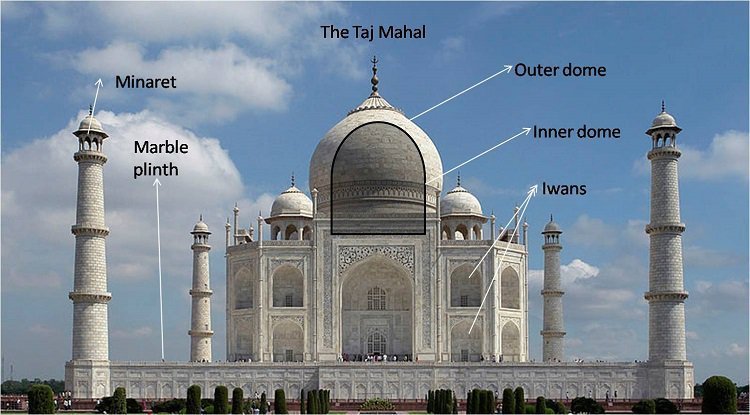
5. The minarets were built tilting outwards to protect the Taj from calamities like earthquakes.
If you observe carefully, you'll find that the four minarets are tilting outwards. Thi s was done so that in the event of a natural disaster, like earthquake, the minars won't fall on the main ' gumbad ' or Dome, thereby ensuring the safety of the Tomb.
6. A temple was built for the conman Natwarlal, who sold the Taj Mahal repeatedly.
Natwarlal who repeatedly sold the Taj Mahal , has a temple on his name. The people of his native village Bangra in Bihar decided to put up a statue of him as his monument, at the place, where his house once stood.
7. The foundation of Taj Mahal would have eroded years ago if Yamuna wasn't there.
Taj's foundation is made of timber which is not supposed to be long lasting. T he wood should weaken overtime and crumble owing to rot and ruin, but that did not happen because the wood is kept strong and moist by the Yamuna river.
8. The interior of Taj is capable of blinding any goblin with its grand inlay work.
28 kinds of rare, semi precious and precious stones were used for inlay work in the Taj Mahal . They were sourced from Sri Lanka, Tibet, China and of course several places in India. During the British rule, the monument was violated several times because of these stones and it was only in the late nineteenth century that restoration work was taken over.
10. How expensive was it for Shah Jehan to build the Taj exactly?
Shah Jehan spent about 32 million rupees during the years 1632-1653 on this great architectural venture. Today that amount would be close to 1,062,834,098 USD.
11. The fountains have a special feature to ensure uniform water pressure in the fountains.
To ensure uniform and undiminished water pressure in the fountains, the fountain pipes were not connected directly with the copper pipes feeding them. Instead a copper pot was provided under each fountain pipe so that the water first fills the pot and then only rises at the same time in the fountains. The pressure in the pots is maintained and so in the fountains.
14. Shah Jehan wanted to build another Taj Mahal , a black Taj Mahal .
Emperor Shah Jehan is widely believed to have desired a mausoleum for himself similar to that of the one he had built in memory of his wife, Mumtaz Mahal . The writings of the European traveller, Tavernier mention that Shah Jehan began to build his own tomb on the other side of the river but could not complete it as he was deposed by his own son Aurangzeb .
The plinth of the tomb is 2'10" on an average but varies all around. T his convexity has deliberately been given to the plinth in the center of each arch. The architect fully anticipated the apparent size which a finial would present from such a great height. If this wasn't the way then the building would have appeared as if it were falling down.
18. Shah Jehan's daughter Jahanara Begum refused a grand burial like the Taj .
She said:
Allah is the Living, the Sustaining. Let no one cover my grave except with greenery, For this very grass suffices as a tomb cover for the poor. The mortal simplistic Princess Jahanara, Disciple of the Khwaja Moin-ud-Din Chishti, Daughter of Shah Jahan the Conqueror May Allah illuminate his proof.
Source: Times city
19. An American Grammy Award-winning artist named himself Taj mahal.
Henry Saint Clair Fredericks, who uses the stage name Taj Mahal, is an American Grammy Award-winning Blues musician.
Planning a visit to the Taj Mahal? If you don't know already, there may be a few questions running through your mind like who built the Taj, why was it built, when's the best time to visit, the timings, the fee and a whole lot of stuff that you'd want to know before you pay a visit to the Taj. Don't worry at all, as this section on "Taj Mahal facts" will provide you with a few fast facts to up your knowledge along with the basic queries that you want to be answered as soon as possible. Read on to get some quick information about Taj Mahal and Agra. And once read, don't waste time. Just pack your bags, book your tickets and pay a visit to the world's most spectacular monument that epitomizes love at par.
Fast Facts Year of Construction: 1631 Completed In: 1653 Time Taken: 22 years Built By: Shah Jahan Dedicated to: Mumtaz Mahal (Arjumand Bano Begum), the wife of Shah Jahan Location: Agra (Uttar Pradesh), India Building Type: Islamic tomb Architecture: Mughal (Combination of Persian, Islamic and Indian architecture style) Architect: Ustad Ahmad Lahauri Cost of Construction: 32 crore rupees Number of workers: 20,000 Highlights: One of the Seven Wonders of the World; A UNESCO World Heritage Site Timings: Sunrise to Sunset (Friday closed) Fee: Rs 750 (Foreign Tourists)
Rs 510 (Citizens of SAARC & BIMSTEC Countries)
Rs 20 (Domestic Indian Tourists)
No Entry Fee for children below 15 years of age (Domestic or Foreigner)
Interesting Facts Of Taj Mahal
Before his accession to the throne, Shah Jahan was popularly known as Prince Khurram.
Shah Jahan fell in love with the beautiful Arjumand Bano Begum and married her, making her his third wife.
Arjumand Bano Begum was christened by Shah Jahan as Mumtaz Mahal, meaning the “Chosen One Of The Palace” or “Jewel of the Palace”.
Shah Jahan lost Mumtaz Mahal, when she died giving birth to their 14h child.
For the transportation of the construction materials, more than 1,000 elephants were employed.
As many as 28 different varieties of semi-precious and precious stones were used to adorn the Taj with exquisite inlay work.
Depending on what time of the day it is and whether or not there’s moon at night, Taj Mahal appears to be of different color every time. Some even believe that this changing pattern of colors depict different moods of a woman.
Passages from Quran have been used as decorative elements throughout the complex.
On the sides of the actual tomb of Mumtaz Mahal, 99 names of Allah can be found as calligraphic inscriptions.
Taj Mahal was built in stages, with the plinth and the tomb taking up roughly 15 years. Building of minarets, mosque, jawab, and gateway took additional 5 years to be completed.
Different types of marbles used in construction of Taj Mahal were brought over from many different regions & countries: Rajasthan, Punjab, China, Tibet, Afghanistan, Srilanka, & Arabia.
Many precious stones and Lapis Lazuli (a semi-precious stone) were ripped off from its walls by the Britishers during the Indian rebellion of 1857.
Taj Mahal attracts 2-4 million visitors annually with over 200,000 from overseas.
The Taj Mahal reigns supreme as one of the most recognisable and iconic images of India. Its delicate minarets, gracefully curved archways and ice cream scoop domes have led many to make the pilgrimage to stand at its entrance and wonder at its grandeur. The wonder isn’t only found in its construction. Here stands a building that is as rich in history as it is in opulent marble. To help better appreciate this history, we have compiled a list of the 10 most interesting facts about Taj Mahal.
It is estimated to have taken more than 22,000 people to build this impressive building including labourers, painters, stonecutters, embroidery artists, and many others.
According to legend it is believed that Emperor Shah Jahan had planned to construct another Taj Mahal in black marble on the other side of the river but the war with his sons interrupted his plans.
The Taj Mahal takes on different colouring at different times of the day, from a pinkish hue in the morning, milky white in the evening and golden at night when lit by the moon. They say the changing colour resembles the changing mood of females - in particular the Emperor's queen.
Built in memory of the Emperors third and most favourite wife Mumtāz Mahal, the Taj Mahal took 17 years to be completed.
It is said that the death so crushed the Emperor that all his hair and beard were said to have grown snow white within just a few months.
The four sides of the Taj Mahal are perfectly identical creating an astonishingly mirrored image on each side. It uses the principles of self-replicating geometry and symmetry of architectural elements.
The Taj Mahal is surrounded by significant gardens and a number of other buildings including a mosque and guest houses which make up the 17 hectares of land within the complex walls.
The full height of the Taj Mahal is 171 metres (561 feet).
More than 1,000 elephants were employed to transport the construction materials used to build the Taj.
Many precious stones were ripped off from its walls by the British during the Indian rebellion of 1857.
The Taj Mahal of Agra is one of the Seven Wonders of the World, for reasons more than just looking magnificent. It's the history of Taj Mahal that adds a soul to its magnificence: a soul that is filled with love, loss, remorse, and love again. Because if it was not for love, the world would have been robbed of a fine example upon which people base their relationships. An example of how deeply a man loved his wife, that even after she remained but a memory, he made sure that this memory would never fade away. This man was the Mughal Emperor Shah Jahan, who was head-over-heels in love with Mumtaz Mahal, his dear wife. She was a Muslim Persian princess (her name Arjumand Banu Begum before marriage) and he was the son of the Mughal Emperor Jehangir and grandson of Akbar the Great. It was at the age of 14 that he met Mumtaz and fell in love with her. Five years later in the year 1612, they got married.
Mumtaz Mahal, an inseparable companion of Shah Jahan, died in 1631, while giving birth to their 14th child. It was in the memory of his beloved wife that Shah Jahan built a magnificent monument as a tribute to her, which we today know as the "Taj Mahal". The construction of Taj Mahal started in the year 1631. Masons, stonecutters, inlayers, carvers, painters, calligraphers, dome-builders and other artisans were requisitioned from the whole of the empire and also from Central Asia and Iran, and it took approximately 22 years to build what we see today. An epitome of love, it made use of the services of 22,000 laborers and 1,000 elephants. The monument was built entirely out of white marble, which was brought in from all over India and central Asia. After an expenditure of approximately 32 million rupees, Taj Mahal was finally completed in the year 1653.
It was soon after the completion of Taj Mahal that Shah Jahan was deposed by his own son Aurangzeb and was put under house arrest at nearby Agra Fort. Shah Jahan, himself also, lies entombed in this mausoleum along with his wife. Moving further down the history, it was at the end of the 19th century that British Viceroy Lord Curzon ordered a sweeping restoration project, which was completed in 1908, as a measure to restore what was lost during the Indian rebellion of 1857: Taj being blemished by British soldiers and government officials who also deprived the monument of its immaculate beauty by chiseling out precious stones and lapis lazuli from its walls. Also, the British style lawns that we see today adding on to the beauty of Taj were remodeled around the same time. Despite prevailing controversies, past and present threats from Indo-Pak war and environmental pollution, this epitome of love continuous to shine and attract people from all over the world.
In the name of Allah, the Most-Merciful, the All-Compassionate
"May the Peace and Blessings of Allah be Upon You"
VALENTINE'S DAY - History & Islamic Perspective
What is it and where did it come from? Consider Valentine's Day, a day that after dying out a well deserved death in most of Europe (but surviving in Britain and United States) has suddenly started to emerge across a good swath of Muslim countries. Who was Valentine? Why is this day observed? Legends abound, as they do in all such cases, but this much is clear: Valentine's Day began as a pagan ritual started by Romans in the 4th century BCE to honor the god Lupercus. The main attraction of this ritual was a lottery held to distribute young women to young men for "entertainment and pleasure"--until the next year's lottery. Among other equally despicable practices associated with this day was the lashing of young women by two young men, clad only in a bit of goatskin and wielding goatskin thongs, who had been smeared with blood of sacrificialgoats and dogs. A lash of the "sacred" thongs by these "holy men" was believed to make them better able to bear children.
As usual, Christianity tried, without success, to stop the evil celebration of Lupercalia. It first replaced the lottery of the names of women with a lottery of the names of the saints. The idea was that during the following year the young men would emulate the life of the saint whose name they had drawn. (The idea that you can preserve the appearance of a popular evil and yet somehow turn it to serve the purpose of virtue, has survived. Look at all those people who are still trying, helplessly, to use the formats of popular television entertainments to promote good. They might learn something from this bit of history. It failed miserably) Christianity ended up doing in Rome, and elsewhere as the Romans did. The only success it had was in changing the name from Lupercalia to St. Valentine's Day. It was done in CE 496 by Pope Gelasius, in honor of some Saint Valentine. There are as many as 50 different Valentines in Christian legends. Two of them are more famous, although their lives and characters are also shrouded in mystery. According to one legend, and the one more in line with the true nature of this celebration, St. Valentine was a "lovers'" saint, who had himself fallen in love with his jailer's daughter.
Due to serious troubles that accompanied such lottery, French government banned the practice in 1776. In Italy, Austria, Hungry, and Germany also the ritual vanished over the years. Earlier, it had been banned in England during the 17th century when the Puritans were strong.
However in 1660 Charles II revived it. From there it also reached the New World, where enterprising Yankees spotted a good means of making money. Esther A. Howland, who produced one of the first commercial American Valentine's Day cards called--- what else--- valentines, in the 1840s, sold $5,000 worth--when $5,000 was a lot of money--the first year. The valentine industry has been booming ever since.
The history of Valentine's Day serves as a powerful lesson for Muslims. St. Valentine became a Saint trying to resist free sex. Even though there was an attempt to Christianize it, today St. Valentine's day is gone back to its roots. No one even knows that the Church even tried to ban the St. Valentine's Day. Rather, most people think of romance, cupid and his arrow, which are vestiges of pagan Rome.
Pagan origins of Valentine's Day The first information about this day is found in pre-Christian Rome, when pagans would celebrate the "Feast of the Wolf" on February 15, also known as the Feast of Lupercalius in honour of Februata Juno, the Roman goddess of women and marriage, and Pan, Roman god of nature.
On this day, young women would place their names in an urn, from which boys would randomly draw to discover their sexual companion for the day, the year, and sometimes the rest of their lives. These partners exchanged gifts as a sign of affection, and often married.
Christian Influence When Christianity came onto the scene in Rome, it wanted to replace this feast with something more in line with its ethics and morality. A number of Christians decided to use February 14 for this purpose. This was when the Italian Bishop Valentine was executed by the Roman Emperor Claudius II for conducting secret marriages of military men in the year 270.
Claudius II decided that single men made better soldiers than those with wives and families, so he outlawed marriage for young, single men, who made up his military. Valentine defied Claudius and performed marriages for young couples in secret. When his actions were revealed, Claudius put him to death. Another version of the story says that Valentine was a holy priest in Rome, who helped Christians escape harsh Roman prisons where they were often beaten and tortured.
Valentine was arrested and sent to the prefect of Rome for this. He found that his attempts to make Valentine renounce his faith were useless, and so recommended he be beaten with clubs, and later beheaded. This took place on February 14, 270.
According to the Catholic encyclopaedia, there are at least three different Saint Valentines, all of whom are Christian martyrs of February 14. One of them is described as a priest from Rome (as mentioned above), another as bishop of Interamna (modern Terni), and the third from Africa.
It was in the year 496 that Pope Gelasius officially changed the February 15 Lupercalia festival to the February 14 St. Valentine's Day to give Christian meaning to a pagan festival. The holiday become popular in the United States in the 1800's during the Civil War.
As well, Pope Gelasius ordered a slight change in the lottery for young women that would take place during the pagan festival. Instead of the names of young women, the box would have the names of saints. Men and women were allowed to draw from the box, and the purpose of this was to copy the ways of the saint they had selected for the rest of the year.
Valentine's Day Customs A number of the customs connected to Valentine's Day originate in the belief in England and France during the middle Ages, that on February 14, birds began to pair.
Fourteenth and 15th centuries' French and English literatures make indirect references to the practice. Those who chose each other as husband and wife on Valentine's Day apparently called each other their Valentines.
In terms of the Valentine's greeting "Your Valentine" which today you find on a number of Valentine's Day cards, the above-mentioned Roman priest Valentine actually sent the first 'valentine' greeting himself.
While he was in prison awaiting execution, he apparently fell in love with a young girl who would visit him. Before he died, he allegedly wrote her a letter, signed 'From your Valentine,' In terms of the virtually naked, arrow-shooting cupid character, which shoots people with its arrows to make them fall in love, this character is a vestige of Roman pagan times. Cupid was described as the son of Venus, the Roman god of love and beauty. You usually find Cupid's picture on Valentine cards and other paraphernalia .
Islamic Perspective We should avoid anything associated with pagan immoral practices - We do not
need to honour or celebrate the death of a Christian "saint" - Islam does not encourage flirting or suggestions of romantic relationships before marriage - Love between families, friends and married people does not need to be celebrated on a day with such un-Islamic origins.
Question: In recent times, celebration of the Valentine Day has spread, particularly among female students. It is a Christian celebration, and it is (manifested) with fully red costumes, clothing and shoes, and exchange of red roses. What is the ruling on celebrating this holiday ? Answer: Celebrating the Valentine Day is not permissible because: Firstly, it is an innovated holiday that has no basis in the Sharee`ah. Secondly, it calls to love and passion. Thirdly, it calls to keeping one's heart busy with nonsense matters which contradict the guidance of the righteous predecessors, may Allah be pleased with them.
So it is not permissible that anything from the signs of that holiday takes place on that day, whether it relates to eating, drinking, clothing, giving gifts, or other than that. It is incumbent upon the Muslim to be proud of his/her religion and that he/she does not blindly follow every crier. May Allah the Exalted protect Muslims from every trial, apparent and hidden, and that He give them protection and guidance. Ameen.
Question Some people celebrate Yawm al-Hubb (Valentine's Day)on February 14 [the second month of the Christian Gregorian calendar] every year by exchanging red roses as gifts. They also dress up in red clothing, and congratulate one another (on this occasion). Some sweet shops produce special sweets - red in colour - and draw hearts upon them. Some shops advertise their goods which are specially related to this day. What is the Islaamic view [concerning the following]: Celebrating this day? Buying from these shops on this day? Selling - by shop-owners who are not celebrating - the things which are used as gifts, to those who are celebrating?
Response The clear evidence from the Qur.aan and Sunnah - and this is agreed upon by consensus (Ijmaa') of the early generations of the Muslim Ummah - indicates that there are only two 'Eeds in Islaam (days of celebration) : 'Eed al-Fitr (after the fast of Ramadhaan) and 'Eed al-Adhaa (after the standing at 'Arafah for pilgrimage).
Every other 'Eed - whether it is to do with a person, group, incident or any other occasion - is an innovated 'Eed. It is not permissible for the Muslim people to participate in it, approve of it, make any show of happiness on its occasion, or assist in it in any way - since this will be transgressing the bounds of Allaah: " ...and whoever transgresses the bounds of Allaah, he has wronged his own self," [Soorah at-Talaaq, Aayah 1]
If we add to this fabricated 'Eed the fact that it is one of the 'Eeds of the disbelievers, it is sin upon sin. This is because it is Tashabbuh (imitation) of the disbelievers, and a type of Muwaalaat (loyalty) to them. And Allaah has prohibited the believers from imitation of them and having love or loyalty for them in His Mighty Book (Qur.aan). It is also confirmed from the Prophet (sal-Allaahu `alayhe wa sallam) that he said: " Whoever imitates a people is one of them."
'Eed al-Hubb (the celebration of Valentine's Day) comes under the category of what has been mentioned here, since it is one of the pagan Christian holidays. Hence it is not permissible for any Muslim, who believes in Allaah and the Last Day, to participate in it, approve of it, or congratulate (anyone on that occasion). On the contrary, it is obligatory to abandon it and stay far away from it - in response to Allaah and His Messenger, and to distance oneself from the anger of Allaah and His punishment.
Additionally, it is forbidden for a Muslim to assist or help in this Valentine's Day, or any other of the forbidden/illegal celebrations in any way whatsoever - whether by food or drink, selling or buying, production, gift-giving, correspondence, announcements, etc. All of these things are considered as co-operating in sin and transgression and disobedience of Allaah and His Messenger. Allaah, the Glorious and Most High, says: "... and co-operate with one another in righteousness and piety, and do not co-operate in sin and transgression. And fear Allaah! Verily Allaah is severe in punishment," [Soorah al-Maa.idah, Aayah 2]
Likewise, it is obligatory for every Muslim to adhere strictly to the Qur'aan and Sunnah in every situation - especially in times of temptations and corruption. It is incumbent that he/she understand, be aware and be cautioned from falling into the deviations of those whom Allaah is angry with and those who are astray and the immoral people who have no fear of punishment - nor hope of reward - from Allaah, and who give no attention at all to Islaam.
It is necessary for the Muslim to flee to Allaah, the Most High, seeking His Hidaayah (Guidance) and Thabaat (Firmness) upon the Path. Verily, there is no Guide except Allaah, and no One Who can Grant Firmness except Him. __________________
21 Things About America That Most Americans Don't Realize.
Some Americans have trouble remembering the words to the Star
Spangled Banner and that is like the most basic American thing to know.
It would be asking a little much to have the populace dig deeper and
find out more weird things about our country. So sit back and relax,
we've done all the research for you and I've provided this neat little
compendium of strange but true facts about America. Educate yourself!
1. 1 out of every 8 Americans have been employed by McDonald's at some point.
America certainly is a great country and after learning some of these
facts, I feel better about myself and more educated about this great
land. Share this post if you're proud to be an American. If you don't
share it, I'm just going to assume you hate America and I'll have to
tell you to GET OUT OF MY COUNTRY!
The following are 40 weird facts about the United States that are almost too crazy to believe….
#1 The highest point in the state of Florida is only 345 feet (115 yards) above sea level. #2 Today, 66 percent of all Americans are considered to be overweight. #3 The state of Alaska is 429 times larger than the state of Rhode Island is. But Rhode Island has a significantly larger population than Alaska does. #4 The average supermarket in the United States wastes about 3,000 pounds of food each year. #5 Approximately 48 percent of all Americans are currently either considered to be “low income” or are living in poverty. #6 Alaska has a longer coastline than all of the other 49 U.S. states put together. #7 In the UK, an average of about $3,500 is spent on healthcare per person each year. In the United States, an average of about $8,500 is spent on healthcare per person each year. #8 Montana has three times as many cows as it does people. #9 The average U.S. citizen drinks the equivalent of more than 600 sodas each year. #10 The only place in the United States where coffee is grown commercially is in Hawaii. #11 The United States has 845
motor vehicles for every 1,000 people. Japan only has 593 for every
1,000 people and Germany only has 540 for every 1,000 people. #12 The grizzly bear is the official state animal of California. But no grizzly bears have been seen there since 1922. #13 For many years it was the other way around, but today a majority of all Americans (including Pat Robertson) actually support the legalization of marijuana. #14 Jimmy Carter was the first U.S. president to have been born in a hospital. #15 In the middle of the last century, the United States was #1 in the world in GDP per capita. Today, the United States is #13 in GDP per capita. #16 Today, approximately 25 million American adults are living with their parents. #17 One survey found that 25 percent of all employees that have Internet access in the United States visit pornography websites while they are at work. #18 In 2011, our trade deficit with China was more than 49,000 times larger than it was back in 1985. #19 One out of every seven Americans has at least 10 credit cards. #20 The city of Juneau, Alaska is about 3,000 square miles large. It is actually bigger than the entire state of Delaware. #21 The United States puts a higher percentage of its population in prison than any other nation on earth does. #22 There are more unemployed workers in the United States than there are people living in the entire nation of Greece. #23 The original name of the city of Atlanta was “Terminus“. #24 Sadly, more than 52 percent of all children that live in Cleveland, Ohio are living in poverty. #25 The median price of a home in the city of Detroit is now about $6000. #26 Back in 1950, more than 80 percent of all men in the United States had jobs. Today, less than 65 percent of all men in the United States have jobs. #27 According to author Paul Osterman, about 20 percent of all U.S. adults are currently working jobs that pay poverty-level wages. #28 According to the Federal Reserve Bank of New York, approximately 167,000 Americans have more than $200,000 of student loan debt. #29 There are three towns in the United States that have the name “Santa Claus“. #30 There are 313 million people living in the United States. 46 million of them are on food stamps. #31 In the United States as a whole, one out of every four children is on food stamps. #32 In 1940, 68.0% of all women in the 20 to 34 year old age group in the United States were married. In 2010, only 39.2% of women in that age group were married. #33 The United States has a teen pregnancy rate of 22 percent – the highest in the world. New Zealand is number two at 14 percent. #34 According to the CDC, there are 19 million new cases of syphilis, gonorrhea and chlamydia in the United States every single year. #35 The United States has the highest divorce rate on the globe by a wide margin. Puerto Rico is number two. Perhaps Puerto Rico really would fit in as the 51st state. #36 More people have been diagnosed with mental disorders in the United States than in any other nation on earth. #37 The United States has more government debt per capita than Greece, Portugal, Italy, Ireland or Spain. #38 If Bill Gates gave every single penny of his fortune to the U.S. government, it would only cover the U.S. budget deficit for about 15 days. #39 The U.S. national debt is now more than 22 times larger than it was when Jimmy Carter became president. #40 It took from the founding of the nation until
1981 for the U.S. national debt to cross the one trillion dollar mark.
Today, our national debt is well over 15 trillion dollars and we add
more than a trillion dollars to our debt every single year.
George Washington was the first President of the liberty-loving
nation, and The Declaration of Independence was signed in 1776. Both of
these comprise rather well-known events throughout the course of
American history. But there’s a wealth of hidden history nuggets that
you might not know about. Here are ten of them.
1. The Founding Fathers penned the first couple of drafts of the
Declaration of Independence on hemp paper, since at the time at least 75
percent of all the world’s paper was made from cannabis hemp fiber. The
democratic delegates eked out the document’s first and second
drafts—completed on June 28th and July 2nd 1776, respectively—on Dutch
hemp paper. The final document had a more official air, though, as it
was printed on parchment.
2. Months before World War Two culminated in the absolute decimation
of Hiroshima, the Japanese found themselves in a bit of a pinch. Making
the most of the strong air current across the Pacific Ocean, the
Japanese crafted what was likely the first intercontinental weapon
system and attached bombs to hydrogen balloons, in what was known as the
Fu-Go campaign. Depending on weather conditions, it would take each
balloon anywhere from 30 to 60 hours to reach the United States.
Researchers estimate that the Japanese said sayonara to around 9,000
bombs—which were approximately 33 feet in diameter— to the United
States, with 342 known to have reached the United States. Many of them
landed and exploded, with one even killing a whole family in Oregon in
1944. Rumor has it that there may still be dozens – potentially still
active – lying around.
3. The Liberty Bell is an iconic American relic. Unfortunately, its
tolling hasn’t been heard since George Washington’s Birthday in 1846.
The bell, which used to reside in Pennsylvania’s Independence Hall, was
erected in August 1752 and was first rung in July 8, 1776, to celebrate
the first public reading of the Declaration of Independence. Though no
conclusive evidence exists to determine when the bell first cracked
(some argue that Liberty split during the Revolutionary War in 1824,
others speculate that it happened during the funeral of Chief Justice
John Marshall in 1835), it was the cherry tree chopping president’s
birthday that cracked the bell beyond repair.
4. The Republican and Democratic Party symbols emerged less from
political tact and more in jest and retribution. The Democratic Party’s
donkey symbol was adopted in 1828, when, during an election, Andrew
Jackson’s opponents called him a jackass. The Republican Party’s
elephant symbol was adopted in 1874 after satirical cartoonist Thomas
Nast drew an elephant, labeling it “the Republican vote.”
5. Most know that the nation’s first ginger president was a
francophile, but they don’t know just how much he embraced the life of
leisure. Here’s how much: when president, Jefferson would greet White
House guests in his robe and slippers. And while Jefferson didn’t adopt
the bisou, he did initiate the custom of shaking hands when meeting
people – as opposed to bowing that had been favored by George Washington
(who didn’t like physical contact).
6. Aside from being the first President of the United States, George
Washington was also quite the booze hound – and manufacturer. Washington
was a savvy businessman who owned one of the largest distilleries in
18th century America, and by 1799 alone he was producing 11,000 gallons
of whiskey. In 1797 George Washington’s farm manager, a Scot named James
Anderson, convinced his employer that producing whiskey made from corn
and rye grown on the plantation would be a natural complement to his
milling business. Washington erected the 2,250 square foot distillery,
making it among the largest whiskey distilleries in early America.
Today, the two-story stone distillery is reconstructed and operates
seasonally, mashing, fermenting and distilling grain as it was done in
the eighteenth century.
7. On September 25, 1820, Salem, NJ held a trial against…tomatoes.
The general populace believed that tomatoes were poisonous, so Robert
Johnson stepped in to prove them wrong. To do so, he bravely stood
before a crowd at the courthouse and consumed a whole basket of the
delectable fruit. Not dying after consumption, the trial was promptly
dismissed.
8. In 1842, the Society for the Protection of German Immigrants in
Texas (or Adelsverein as it was known in German) set its immigration
aspirations on the Republic of Texas. The society was first established
in Germany, with the ultimate end goal being swapping spurs for
lederhosen and cultivating a German state. By 1847, over 5,000 German
immigrants had established five settlements across the state. A further
2,000 immigrants had arrived by 1853, but the movement failed due to
lack of planning, mistrust and bad business sense.
9. The nation’s 30th Vice President, Charles Gates Dawes, has the
distinction of being not only a banker and politician prior to assuming
the role of Calvin Coolidge’s VP, but also a hit music composer. He
enjoyed playing the piano and composing music, and co-wrote the Melody
in A Major (or Dawes Melody) in 1911. Songwriter Carl Sigman added
lyrics in 1951, changed the name to It’s All in the Game, and Tommy
Edwards later performed it in 1958.The tune topped the charts for six
weeks, and has since been covered by Cliff Richard, Nat “King” Cole,
Isaac Hayes, Barry Manilow, and other artists. Sadly, Dawes couldn’t
hear the fruit of his creative labors; he had been dead for seven years
by the time Tommy Edwards first performed the tune.
10. The United States’ current 50 star flag was designed as a school
project by 17 year-old Robert G. Heft. Heft received a B- for his
efforts, but his teacher said he would reconsider the grade if Congress
accepted Heft’s ostensibly mediocre design. In 1959, that’s precisely
what happened, and Heft’s design was selected to be the latest iteration
of the American flag. His teacher promptly changed the grade to an A.